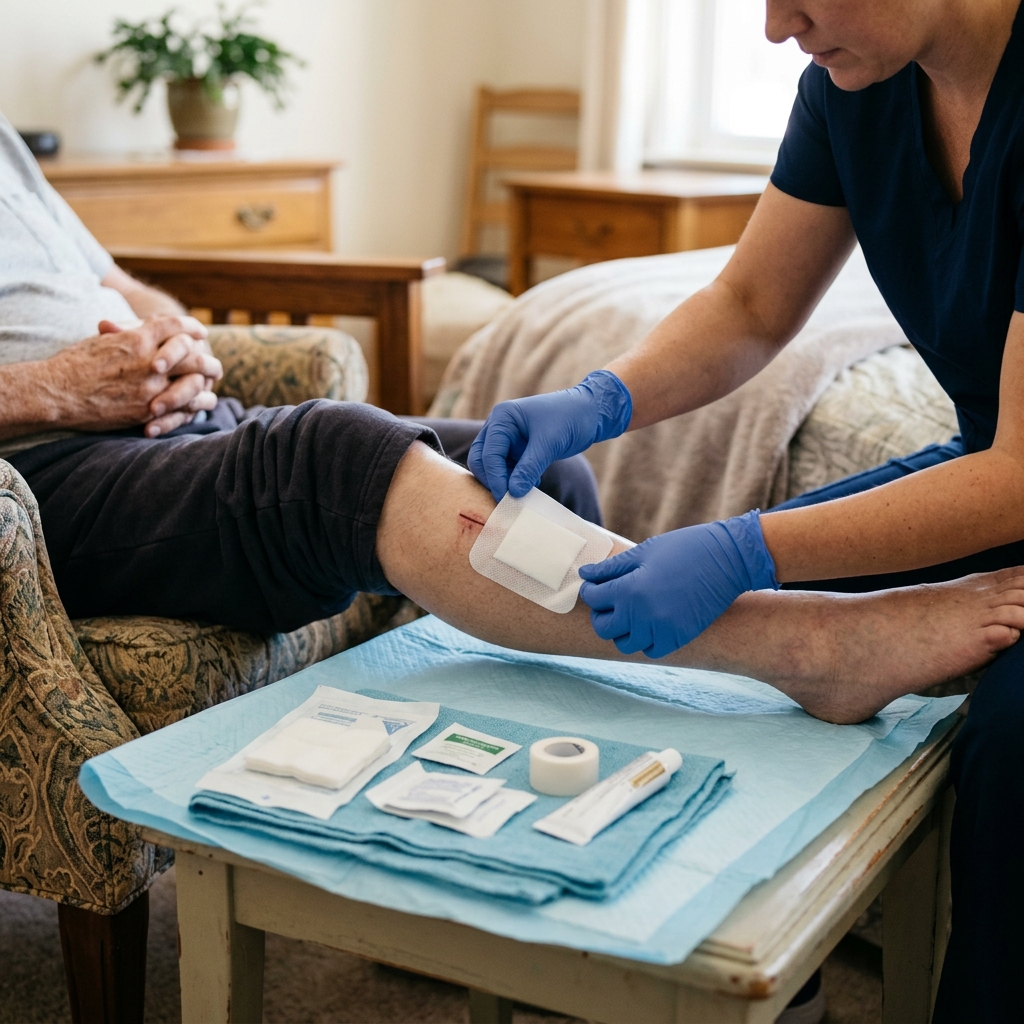
Wound care is one of the most technically demanding aspects of nursing care, and one of the most commonly performed incorrectly at home. Improper wound management is a leading cause of surgical site infection, hospital readmission, and — in the case of chronic wounds — unnecessary progression to serious complications including limb amputation.
This guide explains what best-practice wound care looks like, the difference between a wound you can manage at home and one that requires professional nursing assessment, and when to call Care N Cure.
Understanding Different Wound Types
Not all wounds are the same, and the management principles differ significantly.
Post-Surgical Wounds
These are clean, sutured or stapled wounds created under sterile conditions in theatre. They typically heal within 10–14 days for simple wounds, though deeper or more complex surgery may take longer. Key risks are infection, dehiscence (wound edges separating), and seroma (fluid collection under the skin).
Traumatic Wounds
Lacerations, skin tears, and abrasions from falls or accidents. These carry higher infection risk because they contain contaminants introduced at the time of injury. Elderly patients with thin, fragile skin are particularly vulnerable to skin tears that are slow to heal.
Chronic Wounds
Wounds that fail to progress through the normal healing stages within 4–6 weeks. This includes venous leg ulcers, arterial ulcers, diabetic foot ulcers, and pressure injuries. Chronic wounds require specialist assessment and often specialised dressing products.
What Best-Practice Wound Care Looks Like
Aseptic Technique Is Non-Negotiable
Every wound dressing change performed by our registered nurses uses strict aseptic technique — sterile gloves, sterile dressing materials, and a clean, prepared environment. This is not optional. Introducing bacteria into a wound during a dressing change is a completely avoidable cause of infection.
If someone is changing your wound using non-sterile gloves, ordinary tap water, and cotton wool from a bathroom cabinet — your wound is at risk.
Choosing the Right Dressing Product
Modern wound care science has moved well beyond the old cotton gauze and tape approach. Contemporary wound dressings are designed to:
- •Maintain optimal moisture balance (not too wet, not too dry)
- •Provide a barrier against external contamination
- •Allow gas exchange to support healing
- •Minimise trauma at dressing change
Our nurses select from a range of advanced products based on wound assessment: hydrocolloids for shallow, low-exudate wounds; alginates for heavily exudating wounds; foam dressings for moderate exudate; antimicrobial silver dressings where infection is present or suspected. The choice matters clinically.
Wound Assessment at Every Change
A dressing change is not just a mechanical task. It is a clinical assessment opportunity. At every visit, our nurses document:
- •Wound dimensions (length, width, depth)
- •Wound bed appearance (granulation, slough, necrosis)
- •Exudate type and amount
- •Periwound skin condition
- •Signs of local and systemic infection
- •Healing trajectory (improving, static, deteriorating)
This documentation is shared with your GP or surgical team so they can track progress accurately even without seeing the wound themselves.
Signs Your Wound Needs Urgent Nursing Review
Do not wait for your scheduled visit if you notice:
- •Increasing redness or warmth spreading beyond the wound edges (could indicate cellulitis)
- •New or increasing wound discharge, particularly if it is cloudy, thick, or has a foul odour
- •Wound edges beginning to separate or gape
- •Fever above 38°C (systemic infection)
- •Severe or worsening pain rather than gradually improving pain
- •Wound not showing any signs of healing after 2–3 weeks
Call Care N Cure on 1300 919 663 for urgent wound assessment.
Wound Care for Diabetic Patients — Extra Vigilance Required
Diabetic patients face compounded wound risks: peripheral neuropathy means they may not feel pain from foot wounds; compromised circulation slows healing; and elevated blood glucose impairs immune response. A small cut on a diabetic foot that appears minor can deteriorate rapidly into a serious deep tissue infection.
Our nurses inspect diabetic feet at every visit — regardless of whether wound care was the primary reason for the visit. We look between toes, at pressure points on the sole, and at any areas of skin breakdown. Early identification and immediate treatment is the only way to prevent diabetic foot complications.
Why Professional Wound Care Matters
Many Perth residents attempt to manage post-surgical wounds, chronic ulcers, or skin tears at home without professional support. In straightforward cases, this may be adequate. In complex cases — or where the patient is elderly, diabetic, immunocompromised, or has poor circulation — attempting home wound management without nursing support is risky.
Care N Cure provides professional wound care across all Perth suburbs. Our registered nurses bring clinical-grade products, sterile technique, and the assessment skills to identify problems early. If you or a family member has a wound that needs professional attention, call us to arrange an assessment.
Looking for a Private Registered Nurse at Home?
Because the people you love deserve to stay home safely, Care N Cure provides dedicated, consistent registered nursing care across Perth. Learn more about our Private Nursing at Homeservices, or contact us to discuss your family's needs.